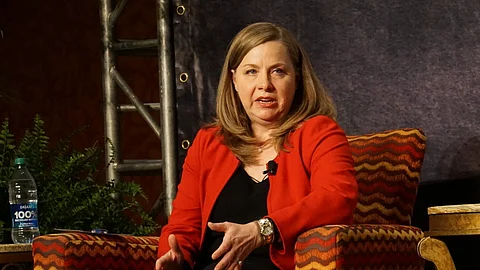
It is too early to decipher the economic impact from the war in Iran, said Federal Reserve Vice Chair for Supervision Michelle Bowman. .Speaking May 29, Bowman outlined her views on how the economy should impact interest rate policies. She said she needs more clarity on the economic impact from the conflict in Iran before deciding on an interest rate policy. The War in Iran is now more than three months old, with uncertainty over its trajectory. Oil and gas prices have spiked since the war began. President Donald Trump said June 1 that indirect talks with Iran were continuing, a short time after an Iranian news outlet said the regime was ending talks and opening up new fronts in the war due to alleged ceasefire violations from the United States and Israel. Bowman said economic research indicates that policy should not be too forceful in stabilizing inflation to keep employment near the maximum-employment objective in response to temporary energy supply shocks. “I am optimistic that, once the conflict is resolved, supply disruptions will ease, leaving a temporary imprint on PCE inflation and minimal impacts on domestic economic activity,” she added. “This view seems consistent with oil futures prices and with financial market optimism. But, should disruptions persist well into the second half of the year, we could start to see broader effects on inflation.”The current Fed Funds rate is 3.50 percent to 3.75 percent. The Federal Open Market Committee kept rates as is in April. The FOMC last cut interest rates in December, a quarter-percentage-point decrease. Bowman said employment remains relatively fragile, with the unemployment rate remaining at 4.3 percent. Though payroll employment has gained this year, she said other signs point to a more fragile economy. Real GDP growth has been rising over the past few quarters amid significant AI-related business investment, Bowman added. Total PCE inflation increased 3.8 percent in April amid higher gasoline and fuel oil prices, with core PCE inflation increasing to 3.3 percent, up since September. Bowman said other inflation measures, excluding price increases from tariff impacts and software prices, indicate core inflation has moved closer to 2 percent since last September. Bowman said strong productivity increases could cause inflation to fall because of lower production costs. “Supportive supply-side policies, including less restrictive regulations and lower business taxes, will also likely favor these conditions,” she added. Perceptions of labor market tightness in business and consumer surveys indicate higher unemployment, Bowman said. She cited employment growth being concentrated in industries less exposed to economic cycles, including health care and social assistance. “The U.S. economy has been resilient, but the labor market remains vulnerable to adverse shocks,” Bowman added. Federal Reserve Gov. Lisa Cook also supports holding interest rates as is, but indicated she is willing to raise interest rates if disinflation does not occur soon. Speaking May 27, she said inflation was heading in the wrong direction.